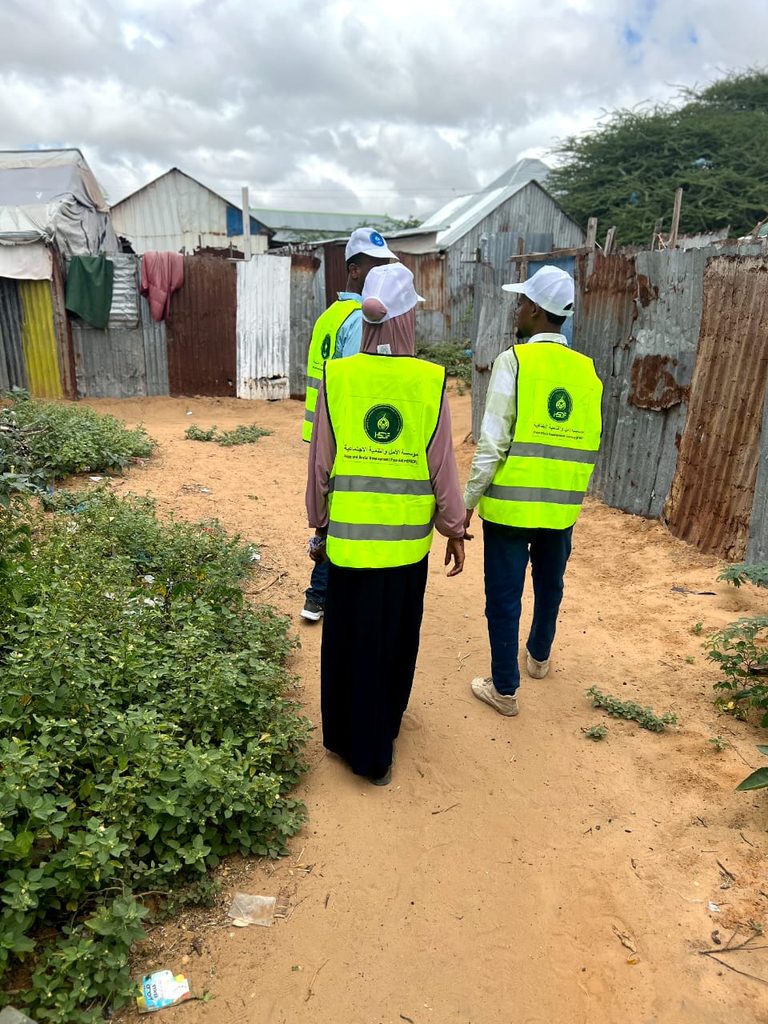
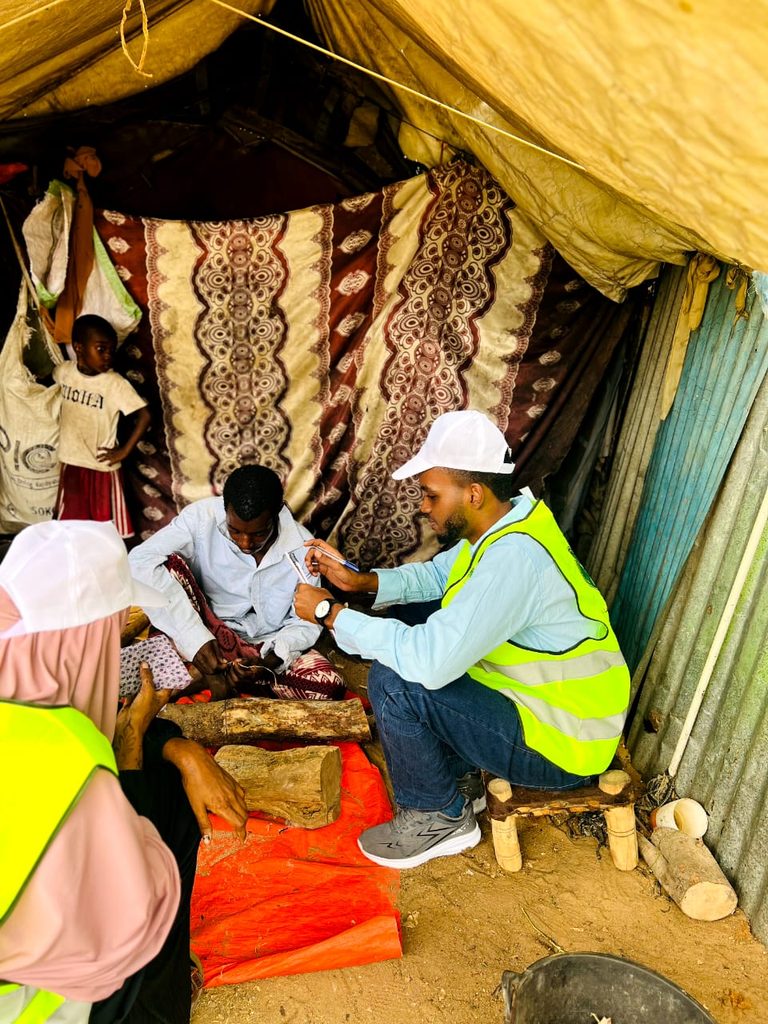
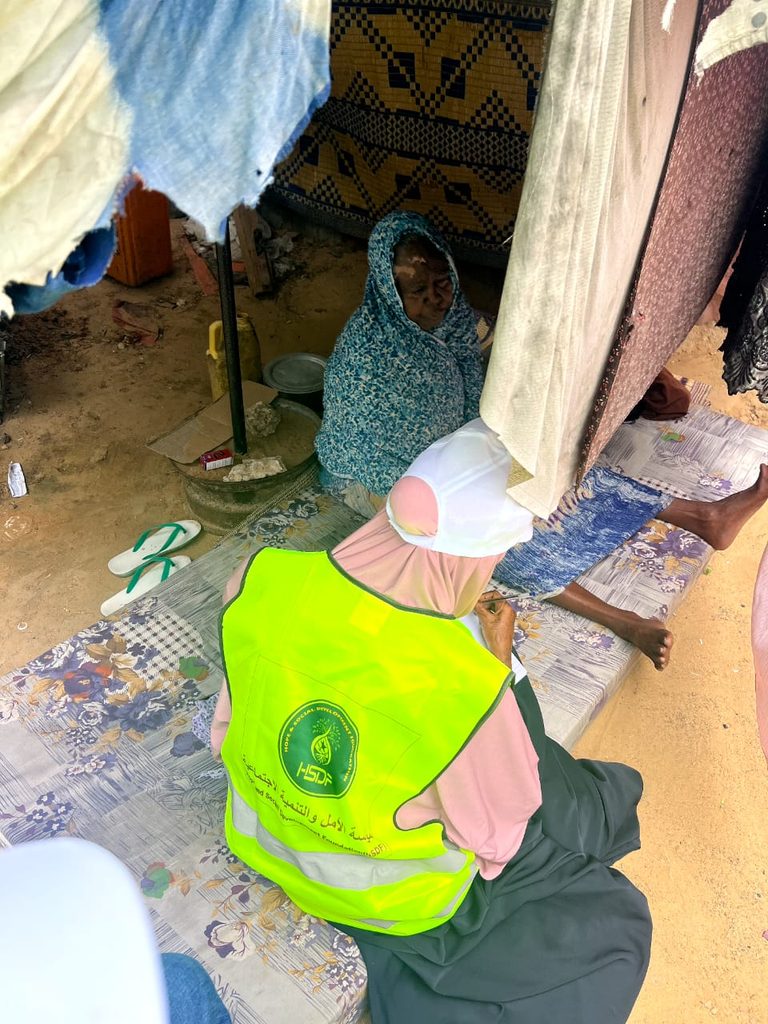
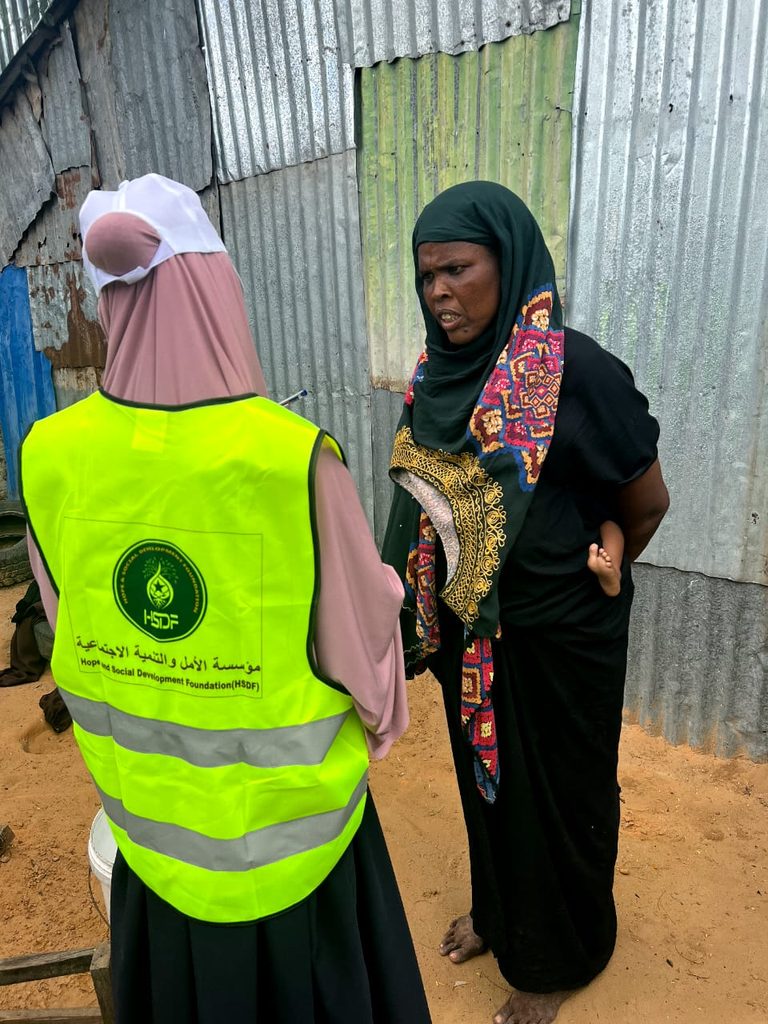
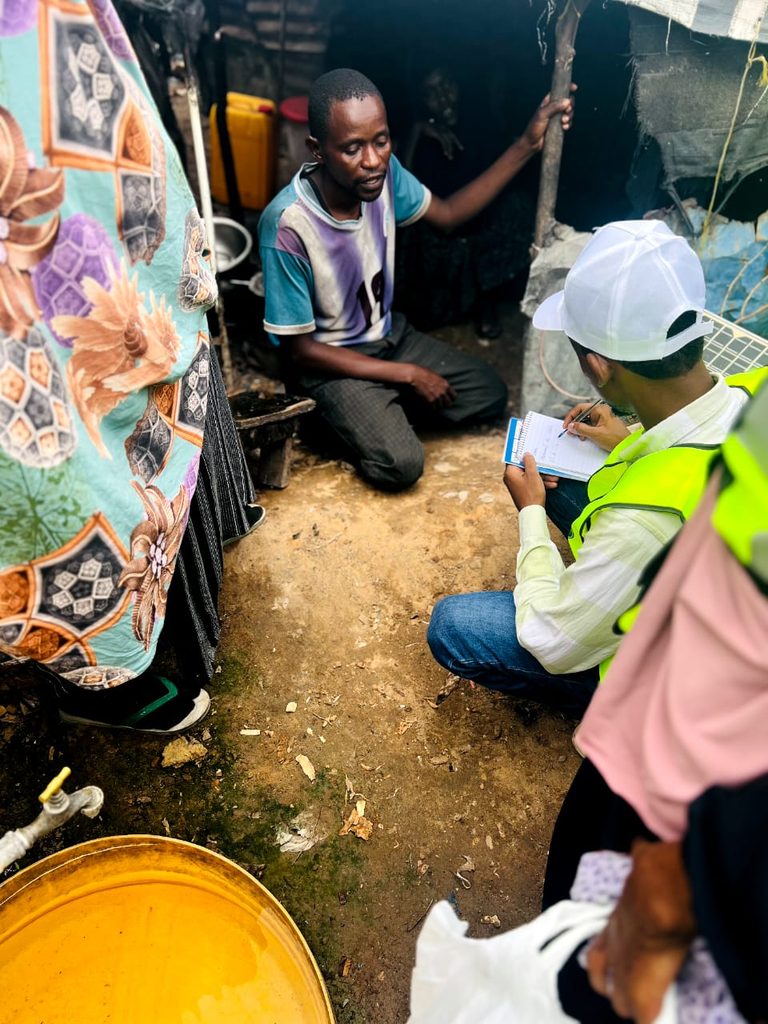
Hope and Social Development Foundation (HSDF) has conducted a rapid humanitarian needs assessment in three internally displaced persons (IDP) camps in the Banadir Region to better understand the challenges facing displaced families and identify their most pressing needs.
The assessment was carried out at Bilkheyr IDP Camp in Gubadley District, and Safaari and Hurubow IDP Camps in Kahda District. A total of 80 households were interviewed across the three locations, providing an opportunity for families to share their experiences and explain the difficulties they face in meeting their daily needs.
The assessment focused on understanding the situation of families who have been displaced from conflict-affected areas in southern Somalia. Displacement often forces families to leave behind their homes, livelihoods, and support networks, making it difficult to establish a stable life in a new location. For many households, finding sufficient food, accessing water, and ensuring that children can continue their education become immediate concerns.During the assessment, three main concerns emerged from household interviews: food shortages, insufficient access to water, and financial difficulties affecting children’s education.
Food insecurity remains a serious concern for families who have limited resources and few reliable sources of income. When households struggle to obtain enough food, meeting everyday needs becomes increasingly difficult. Understanding these challenges is an important step toward identifying families who may require humanitarian food assistance and determining what support is available.
Access to water was another concern raised by households. Reliable water supplies are essential for drinking, cooking, cleaning, and maintaining basic hygiene. When families cannot access sufficient water, their daily routines become more difficult, particularly when financial constraints limit their available options. The assessment highlights the importance of examining existing water services and identifying gaps that may require further attention.
Education was also identified as a priority, particularly because of the financial challenges parents face in supporting their children’s schooling. Displacement can place additional pressure on household budgets, leaving families struggling to meet education-related expenses. For children, these financial barriers may create difficulties in accessing or continuing their education. Identifying practical ways to support affected families is therefore an important consideration in future programme planning.Although the challenges reported by households may differ from one family to another, the findings point to the importance of listening to displaced communities and understanding their priorities before planning assistance.
For HSDF, the assessment represents an important step toward developing a clearer understanding of the humanitarian situation in the selected IDP camps. Rather than relying on assumptions about the needs of displaced people, the activity provided an opportunity to gather information directly from households and identify concerns that deserve further attention.
The information collected will help inform HSDF’s humanitarian planning and guide discussions on potential interventions related to food security, water access, and education. It will also provide a starting point for further engagement with community representatives, local authorities, humanitarian partners, and donors.
The findings are an initial picture of the needs reported by the 80 interviewed households. Further analysis of the original assessment records will be necessary to establish detailed household-level needs, determine the number of families requiring specific forms of assistance, and support appropriate beneficiary selection. This will help ensure that future programmes are based on verified information and respond to the circumstances of affected families.
Addressing the challenges facing displaced families requires cooperation among humanitarian organizations, government authorities, donors, community representatives, and service providers. No single organization can meet every need, making coordination and partnership essential to achieving a meaningful response.
HSDF will use the assessment findings to inform programme development, explore opportunities for collaboration, and engage potential partners and donors on the priority concerns identified by households. Where appropriate, coordination with organizations working in food assistance, water and sanitation, and education can help identify existing services, strengthen referrals, and reduce duplication of support.
Future interventions should take into account the different circumstances of displaced households, with particular attention to families facing significant barriers to meeting their basic needs. Continued engagement with affected communities will also be important in ensuring that assistance is relevant, accessible, and responsive to their priorities.Hope and Social Development Foundation remains committed to working alongside vulnerable communities to address urgent needs, improve access to essential services, and strengthen resilience.
Through its humanitarian and community development work, HSDF seeks to support practical solutions that help families manage immediate challenges while creating opportunities for longer-term stability and self-reliance. The organization recognizes that behind every assessment are families with individual experiences, concerns, and hopes for a better future.
The assessment in Bilkheyr, Safaari, and Hurubow is a step toward better understanding those experiences and identifying opportunities for appropriate support. HSDF encourages continued collaboration among stakeholders to help ensure that the needs of displaced communities remain part of humanitarian planning and response efforts.